MATTRESSES

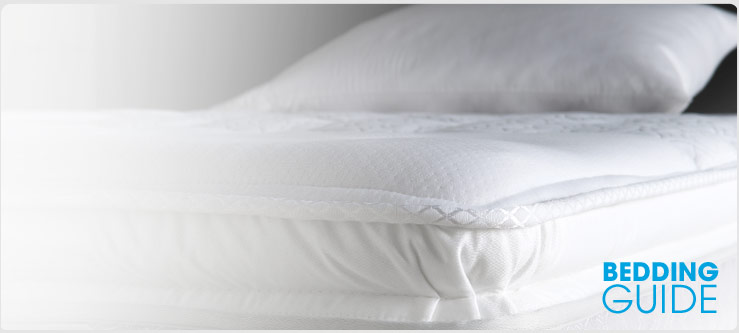


There are obvious and not-so-obvious signs when you need a new mattress. If your current mattress sags in the middle, has noticeable depressions where you usually sleep or feels lumpy, it probably isn't providing the support you need for a peaceful night's sleep. If you share a mattress and frequently wake up to your partner tossing and turning, a larger mattress will offer more personal space. You should also consider buying a new mattress if the one you have now is over five to seven years old.
Other more subtle signs you need to buy a mattress are: if you wake up still feeling tired or achy, or if you sleep better in hotels than at home.
Buying a mattress is an investment, so you might be surprised that your seven-year-old mattress is at the end of its lifespan. It makes sense when you think about its daily wear and tear. For example, if you sleep 7 hours a night, your body has put pressure and stress on that mattress for 17,885 hours! Comfort and support understandably weaken as the mattress ages. Other reasons to get a new mattress at this time are because your body's needs change as you grow older and your existing mattress becomes soiled by nightly perspiration.
Don't settle for a saggy, bumpy, lumpy mattress with lackluster support. Look to this guide to know how to buy the mattress of your dreams.
Mattress TypesIf you haven't bought a mattress in quite some time, you'll be amazed at the new options, thanks to new technology and improved designs. The most popular mattress types are innerspring, memory foam, latex foam and inflatable mattresses.
Innerspring mattresses - open coils or springs are layered between cushy padding called comfort layers or upholstery layers. Some innerspring mattresses feature individually wrapped coils for a more custom fit and less disturbance by partners who move in their sleep.Innerspring mattresses are the best-selling types today and usually the least expensive.
Memory foam mattresses (visco-elastic foam mattresses) - first used by astronauts to withstand G-force pressures, memory foam is firm, high-density polyurethane that responds to body heat and weight. A memory foam mattress actually contours around you as your body temperature warms it.Memory foam mattresses eliminate pressure points by evenly distributing body weight. They are hypoallergenic and offer natural body alignment. Not all memory foam mattresses feel the same and it takes some people time to adjust to how they feel.
Latex foam mattresses - rubber tree-based, hypoallergenic mattresses that contour to your body, alleviating pressure points. Unlike memory foam mattresses, latex foam mattresses are not temperature-sensitive and come in a variety of densities. Like goose down, latex has a breathable quality that keeps you warmer when it's cool and cooler when it's warm. Latex foam mattresses are also antimicrobial and dust mite-resistant.Some latex foam mattresses can be synthetic or a synthetic and natural latex blend. Synthetic latex is created in a lab, but made of the same chemical compound as natural latex, without the impurities.
Inflatable mattresses - have air chambers so body support is completely adjustable. Inflatable mattresses are designed to mirror spring mattress size, feeling and features - some even have built-in pillow tops.

Learn about these elements before you comparison shop so you can make an educated guess on what the mattress will feel like.
Mattress ConstructionCoils, cushioning, ticking, insulation, quilting and the companion box spring all affect how a mattress feels. Learn about these elements before you shop so you can make an educated guess on what the mattress will feel like.
Coils - the springs in a mattress. Coil count - is the number of coils in a mattress. A mattress with a high coil count is more supportive than one with a lower coil count. Those with restless sleep partners prefer higher coil counts because there are more coils to absorb movement.Coil gauge - the thickness of the coil wire. Most mattress coils are between 12 and 15 gauge. Coils with low gauges are thicker and will feel firmer than mattresses with higher gauge coils. This feature is less advertised than coil count, but can be helpful if you already know the coil gauge of a mattress you find comfortable.
Upholstery - the soft layers that make the innerspring mattress comfortable. Upholstery includes mattress insulation, cushioning, quilting and ticking. Insulation - fiber or mesh that lies on top of the mattress' coil springs and prevents padding from interfering with the coils. Cushioning - also called the middle padding, this is the main contributor to how a mattress feels. Cushioning can be made out a wide assortment of materials and will determine the durability, comfort and cost of the mattress. Tufting - how the mattress cushioning was stitched into place - also determines these qualities. Quilting - the top padding that gives the mattress a surface texture and lets it breathe. Quilting is commonly made of polyurethane foam. Some mattresses have polyester batting to make the quilting even softer and help dry perspiration. Pillow-top and Euro-top are quilting types. Ticking - the protective outer cover of the mattress. Ticking is usually made of polyester or cotton-polyester, but high-end models may use more exotic materials. The mattress's stitch pattern says a lot about how it feels because this is how the ticking is attached to the quilting. Large stitch patterns indicate the mattress will be soft, and tight stitch patterns tend to feel firmer. Box spring - a mattress' foundation. A companion box spring is designed to maximize a mattress's support, comfort and lifespan. Box springs are available in the standard 9" height, and also low-profile versions as low 6" high. Sleep styleWhen buying a new mattress, consider how you sleep the majority of the time. The ideal support and sleep surface varies depending on sleeping position.
Mattresses for back sleepers should have enough cushion to mold to the curve of the spine and support the back. Mattresses for side sleepers should have a plush surface to distribute body weight and minimize pressure points. Mattresses for stomach sleepers should be firmer to keep the spine naturally aligned.
You should also choose your pillows according to how you sleep. Learn more in the pillow buying guide.
Mattress FirmnessThe best surface is purely subjective and personal preference should be your guide. Some people like the total-body support offered by a memory foam mattress, while others find it constrictive. Some prefer a fluffy pillow-top, while others like the firmness of a minimally padded mattress. The choice is yours.
Firm mattresses - have the least amount of cushioning and/or quilting and are the most resistant to mold to your body. Plush mattresses - includes soft comfort layers to minimize resistance. Pillow-top mattresses - the thickest, softest type of innerspring mattress. Multiple layers of extra foam, cotton or wool are sewn into the quilting and create a "sink-in" feeling. Euro-top mattresses feel very similar to pillow-top mattresses - the difference is how the quilting is attached to the ticking. Both styles will compress over time and cannot be replaced.

- Couples should choose a queen-size mattress or larger so they have enough personal space without disturbing each other with their movements.
- Additional layers of cushion have made today's mattresses taller. They used to be 7 inches thick, but now it's common for mattresses to have depths of 14 or 16 inches. If you currently own an older mattress, be sure to get new sheet sets with deep pockets when you buy a new one.
- Routinely rotate your mattress from end to end, top to bottom unless your mattress instructions specifically state it is a no-rotate model. Rotating will prevent body indentations and prolong the mattress's life. Do not flip the box spring.
- Protect your investment from stains with a machine-washable mattress pad.
- Use a strong, quality bed frame that can support the box spring and mattress.
- Regularly vacuum the mattress to remove pet hair, dirt and other debris. Do not dry clean and do not soak the mattress with water.
- To preserve the coils, avoid sitting on the edge of the mattress in the same place all the time.